
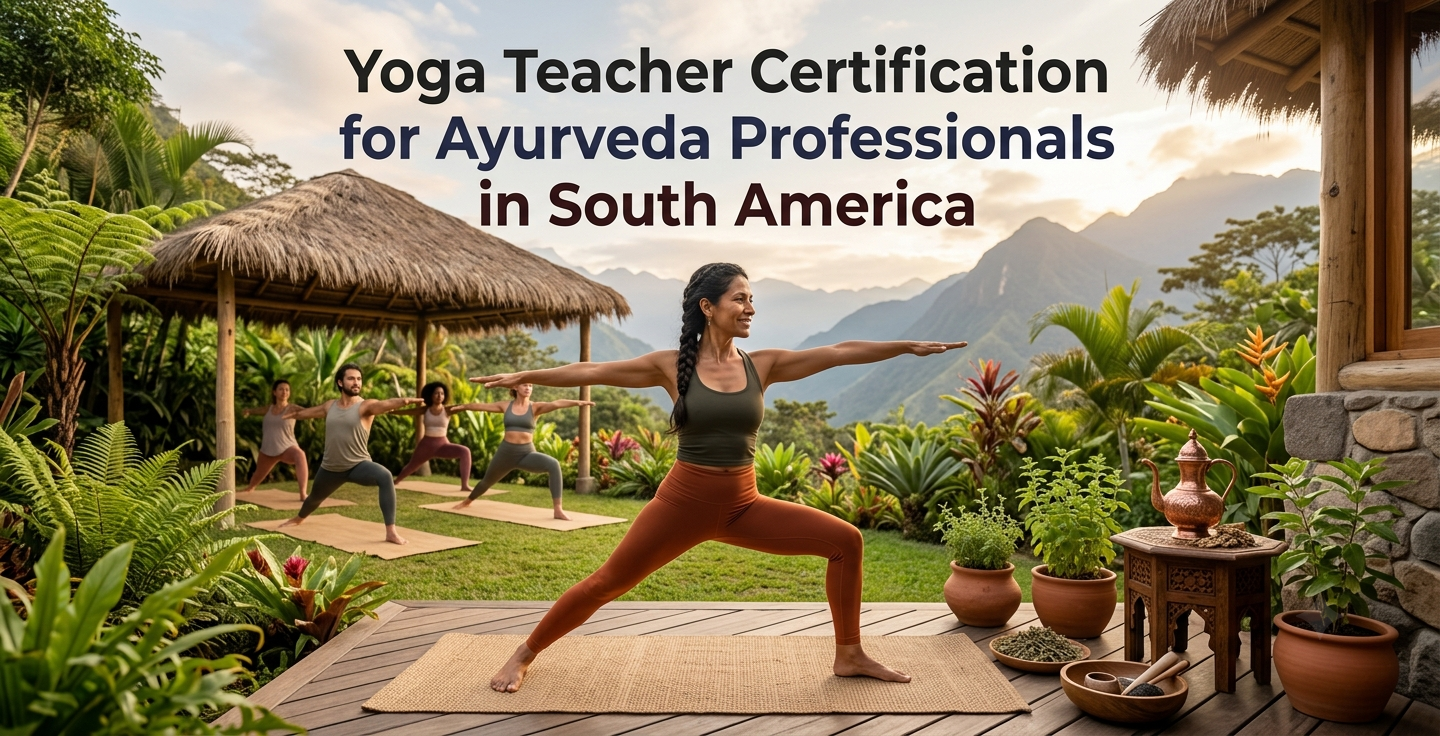
Yoga and Ayurveda are conventional disciplines that promote stability of the body, mind, and overall well-being. Yoga Teacher Certification for Ayurveda Professionals in South America offers an opportunity for Ayurveda practitioners, holistic well-being experts, and traditional health professionals to extend their knowledge and expand their educational skills.
By studying yoga philosophy, bodily postures, breathing techniques, and meditation, specialists can gain a broader understanding of the mind-body connection and traditional fitness practices. As a hobby in holistic wellness continues to grow throughout South America, yoga training is becoming an appealing alternative for specialists attempting to find greater career possibilities.
Countries that include Brazil, Argentina, Chile, Colombia, and Peru offer diverse environments for exploring yoga and well-being practices. Combining yoga education with modern Ayurveda statistics can help practitioners boost their expert offerings, connect with wider corporations, and give a boost to their records of holistic fitness training.
Why Should Ayurveda Professionals Consider Yoga Teacher Certification in South America?
Ayurveda professionals already have data on traditional well-being standards, lifestyle practices, and individual fitness requirements. However, yoga introduces a few other realistic dimensions to holistic well-being through movement, controlled breathing, attention, and meditation. Understanding these practices can help experts broaden their perspective on the relationship among physical health, mental well-being, and everyday lifestyle practices.
South America provides an interesting environment for this analytical journey because yoga and holistic well-being practices have emerged as increasingly visible in business settings. Professionals can explore schooling possibilities, connect with international wellness practitioners, and recognize how conventional practices are adapted for modern audiences. Learning yoga in this area can also provide exposure to particular training environments, cultural perspectives, and effective strategies.
Professional Benefits of Combining Yoga and Ayurveda
-
Broader Wellness Knowledge: Yoga training introduces body postures, breathing practices, rest, and meditation, helping Ayurveda experts understand additional techniques for holistic well-being.
-
Practical Teaching Skills: Structured training develops skills in posture demonstration, creating plans, student guidance, and safe preparation for various practices.
-
Better Understanding of Individual Needs: Studying yoga philosophy alongside Ayurvedic requirements encourages specialists to understand the mind-body connection, physical health, mental health, and personal well-being goals.
-
Expanded Professional Services: Certified specialists may additionally discover yoga commands, well-being workshops, meditation intervals, and complementary lifestyle training inside their present-day professional sports.
-
International Learning Exposure: South America offers opportunities to interact with people from culturally diverse backgrounds and recognize the growing interest in traditional health practices.
-
Long-Term Professional Development: Additional yoga training can assist Ayurveda practitioners in mastering, broadening specialised practices, and building a more comprehensive professional profile.
Take the Next Step in Your Yoga Journey with YAI South America
Whether you are a yoga teacher looking for professional certification or a yoga school seeking certification, YAI provides opportunities to support your professional journey and recognition. Choose the relevant application below to get started.
School: https://form.jotform.com/250402319636452
Teacher: https://form.jotform.com/250700797178464
How Are Yoga and Ayurveda Connected in Holistic Wellness Education?
Yoga and Ayurveda have historic and philosophical connections rooted in conventional Indian knowledge systems. Although they have distinct areas of practice, each emphasises the importance of stability, self-recognition, and disciplined everyday practices. Ayurveda historically specializes in individual constitution, way of life, food plan, and well-being thoughts, even as yoga offers a method based on bodily postures, respiratory exercises, meditation, and moral living. Studying every discipline can assist practitioners in understanding the key factors of holistic health education.
Yoga Teacher Certification for Ayurveda Professionals in South America can introduce practitioners to the philosophical foundations of the integration of those conventional systems. Students can observe the way yoga practices are traditionally mentioned in phrases of the 3 Ayurvedic doshas: Vata, Pitta, and Kapha. These ideas offer a traditional framework for understanding personal constitution and way of life inclinations. However, yoga teachers ought to keep away from making clinical claims or offering modern-day yoga practices as remedies for fitness situations.
Understanding the Connection Between the Two Disciplines
-
Shared Traditional Philosophy: Yoga and Ayurveda each inspire self-focus, private state of affairs, balanced living, and a deeper understanding of the relationship between body and mind.
-
Understanding Doshas: Ayurveda introduces Vata, Pitta, and Kapha as fundamental constitutional mind, supplying context for conventional discussions about character traits.
-
Physical Movement and Flexibility: Yoga asanas introduce moves that are useful for flexibility, mobility, posture focus, and bodily coordination.
-
Breathing and Energy Awareness: Pranayama teaches controlled respiration strategies that encourage consciousness, breath awareness, and rest.
-
Mental Balance and Meditation: Meditation practices inspire mindfulness, interest, and self-statement, which may be relevant to every yoga and holistic wellness education.
-
Lifestyle Awareness: Both disciplines spotlight the importance of regular exercise, mindful conduct, willpower, and consistency in everyday lifestyles.
What Subjects Are Covered in Yoga Teacher Certification for Ayurveda Professionals in South America?
A professional yoga certification programme normally includes theoretical training and practical training. Ayurveda experts should look for guides that provide a balanced study of yoga philosophy, anatomy, body structure, asana exercises, pranayama, meditation, and training strategies. These subjects help students recognize not only how to carry out yoga practices, but also how to offer a rationale behind them and showcase them responsibly. Yoga Teacher Certification for Ayurveda Professionals in South America should ideally build on existing well-being knowledge while developing unbiased yoga education skills.
The precise curriculum depends on the training organization, certification level, teaching style, and course duration. Some programmes address conventional Hatha Yoga, while others introduce Vinyasa Yoga, restorative practices, or meditation-based methods. Professionals have to evaluate the complete syllabus in advance before choosing a programme. An appropriate course should consist of practical training experience, instructor comments, safety precautions, and opportunities to increase self-perception in vital instructions.
Important Subjects in a Professional Yoga Curriculum
-
Yoga Philosophy: Students learn conventional yoga necessities, the Eight Limbs of Yoga, moral standards, self-discipline, and the philosophical foundations of yoga practice.
-
Asana Training: This issue covers vital yoga postures, alignment, modifications, transitions, stability, flexibility, and suitable techniques for demonstrating moves.
-
Pranayama Techniques: Students check conventional respiratory practices, their techniques of instruction, and the significance of introducing breathwork cautiously and regularly with individual abilities.
-
Human Anatomy and Physiology: This trouble introduces the musculoskeletal system, muscle mass, movement patterns, respiratory mechanisms, and simple bodily protection issues.
-
Meditation and Mindfulness: Training includes recognition practices, guided meditation, relaxation techniques, and strategies for supporting college students to increase awareness.
-
Teaching Methodology: Students expand class sequencing, communication, demonstration, observation, scholar interaction, and lesson-planning skills.
-
Yoga and Ayurveda Integration: Some programmes explore traditional relationships among yoga, doshas, lifestyle practices, and holistic fitness standards.
-
Practical Teaching Assessment: Students may be required to demonstrate postures, put together lesson plans, lead exercise lessons, and acquire feedback from certified teachers.
What Are the Eligibility Requirements for Ayurveda Professionals Who Want to Become Yoga Teachers?
Eligibility requirements vary amongst yoga faculties and certification vendors. Ayurveda experts commonly do not need to maintain a clinical degree to enrol in an introductory yoga instructor training programme. However, some institutions can also request prior yoga experience, a fundamental knowledge of anatomy, or participation in regular yoga practice. Professionals with an Ayurveda historical background can also find certain philosophical topics familiar, but they have to go through the sensible information and training required for responsible yoga guidance.
Before enrolling in Yoga Teacher Certification for Ayurveda Professionals in South America, applicants must have a look at the admission requirements carefully. Some courses take in beginners, whilst superior programmes may additionally assume prior yoga training experience. International students need to furthermore remember language requirements, visa arrangements, lodging, course charges, and the availability of realistic durations.
Common Admission Considerations
-
Educational Background: Applicants need to compare whether or not the agency requires a school-diploma qualification, professional well-being education, or previous training in Ayurveda.
-
Previous Yoga Experience: Beginner-friendly programmes may additionally take in students without formal yoga experience, while advanced courses may require regular exercise or an advanced certification.
-
Physical Readiness: Students have to be comfortable collaborating in supervised physical activities and to inform their instructors of any movement limitations.
-
Language Proficiency: Check whether or not the course is taught in English, Spanish, Portuguese, or some other language that the applicant knows.
-
Commitment to Learning: Yoga training calls for consistent attendance, self-practice, theoretical study, practical tests, and participation in business enterprise sports.
-
Documentation and Registration: International candidates should confirm identification requirements, admission files, visa conditions, and any additional institutional strategies.
Which Yoga Styles Should Ayurveda Professionals Study During Their Certification?
Different yoga patterns provide one-of-a-kind training strategies, movement styles, and learning approaches. Ayurveda professionals should recognize the different versions before selecting a teacher training programme. Some patterns emphasise traditional postures and breathing strategies, while others focus on flowing sequences, rest, or moderate activity. Learning multiple strategies can help experts understand how yoga instructions are tailored for specific groups and experience tiers.
Yoga Teacher Certification for Ayurveda Professionals in South America may also embody one primary yoga style alongside introductory training in exceptional techniques. Hatha Yoga is mostly a beneficial basis because it introduces essential postures, breathing practices, alignment, and managed actions. Vinyasa Yoga can offer experience with flowing sequences, whilst restorative and Yin Yoga introduce relaxation-centered practices. The extraordinary method relies upon the scholar’s expert pursuits, training goals, and the curriculum provided with the aid of the use of the training group.
Popular Yoga Styles Worth Exploring
-
Hatha Yoga: This conventional method introduces essential postures, breathing, physical activities, and conscious motion, making it beneficial for developing a strong foundation in yoga practice.
-
Vinyasa Yoga: Vinyasa connects motion with breathing via flowing sequences, supporting students in developing transitions, coordination, and dynamic elegance.
-
Restorative Yoga: This gentle technique makes use of supportive positions and longer intervals of rest to introduce students to gentle, relaxation-focused yoga practices.
-
Yin Yoga: Yin Yoga entails holding certain postures for longer durations, encouraging stillness, staying energy, and awareness of physical sensations.
-
Gentle Yoga: This technique involves gentle movements and adjustments for students who choose a slower pace or need extra guidance throughout the workout.
-
Meditation-Based Yoga: These practices place greater emphasis on mindfulness, awareness, breath awareness, and mental rest alongside physical techniques.
How Long Does Yoga Teacher Training Take for Ayurveda Professionals in South America?
The duration of yoga instructor education is predicated on the certification stage, group, coaching layout, and curriculum. A foundational two hundred-hour programme is a common place to begin for people interested in becoming yoga instructors. It typically combines classroom study, practical training, self-study, and coaching sessions. Some institutions provide in-depth residential courses, while others provide weekend or part-time training schedules over several months.
For Ayurveda professionals, the length of Yoga Teacher Certification for Ayurveda Professionals in South America should be evaluated consistent with study objectives, rather than based on personal opinion. A brief programme may additionally introduce critical yoga ideas; however, becoming an assured instructor requires regular practice, feedback, and sufficient teaching experience. Professionals also need to understand the difference among full-time hours, part-time hours, supervised training hours, and evaluation requirements before you decide.
Common Training Formats
-
Intensive Residential Training: Students attend a full-time programme over numerous weeks, participating in daily practical instruction, lectures, and guided analysis of sports activities.
-
Part-Time Certification: Weekend or night instruction permits working professionals to keep their jobs while completing yoga training over a prolonged period.
-
Blended Learning: Some carriers combine online theoretical education with in-person practical training, giving students flexibility while maintaining supervised coaching.
-
Online Learning: Online publications can introduce yoga philosophy, anatomy, and focus on theoretical topics, even though students want to see how sensible education and evaluation are delivered.
-
Advanced Training: Additional specialised publications can also focus on unique training strategies, meditation, pranayama, or distinctive areas of yoga training.
-
Continuing Professional Education: Workshops, seminars, and refresher programmes assist certified teachers in maintaining and developing their know-how and skills.
How Can Ayurveda Professionals Choose the Right Yoga Certification Programme in South America?
Selecting the right yoga certification programme is an important choice for Ayurveda professionals who need to boost coaching talents and amplify their health facts. Not every yoga route offers the same diploma, practical experience, or certification recognition. Some programmes focus on physical postures, while others offer a more complete curriculum covering yoga philosophy, anatomy, pranayama, meditation, and coaching approach. Professionals should examine unique institutions in advance of committing to a particular path.
When evaluating Yoga Teacher Certification for Ayurveda Professionals in South America, candidates have to be privy to teacher qualifications, curriculum depth, practical training hours, evaluation strategies, and student support. They also need to observe whether or not the organization has long-standing recognition and whether or not its certificates are understood through the use of applicable yoga institutions. For example, people inquisitive about global teaching possibilities may additionally discover schools supplying programmes aligned with Yoga Alliance requirements.
Factors to Evaluate Before Enrolment
-
Curriculum Quality: Choose a programme that covers yoga philosophy, anatomy, asana, pranayama, meditation, and practical coaching in a location focused on bodily postures on my own.
-
Instructor Experience: Review the qualifications, coaching history, and experience of the instructor, and the cost of theoretical and practical instruction.
-
Certification Recognition: Check the issuing organization, certification requirements, registration options, and recognition of the qualification in the countries in which you need to work.
-
Practical Training: Select a direction that includes supervised practice, posture demonstrations, lesson planning, and positive trainer feedback.
-
Learning Language: Confirm that the route is offered in a language you understand and that the learning materials and exams are available.
-
Student Reviews: Read authentic student remarks, have a look at the institution’s previous training programmes, and search for data about its training necessities.
-
Course Fees and Additional Costs: Compare training, lodging, examination charges, excursion costs, and other prices before making a financial commitment.
-
Post-Certification Support: Ask whether or not the corporation offers training guidance, alum networking, continuing training, or opportunities to participate in more workshops.
What Career Opportunities Can Yoga Teacher Certification Create for Ayurveda Professionals in South America?
Combining yoga training with present Ayurveda records can introduce several expert development opportunities. Ayurveda practitioners may also already work in traditional wellbeing consultations, lifestyle education, holistic health centres, or related fields. Adding yoga training capabilities can assist them in exploring complementary educational services and speaking more effectively with individuals interested in holistic well-being. However, these opportunities will depend on a close match between expert qualifications, relevant policies, and character training experience.
Yoga Teacher Certification for Ayurveda Professionals in South America can guide experts who need to work in yoga studios, well-being retreats, fitness centres, meditation centres, and impartial well-being education. The region includes awesome cultural corporations and fitness markets, creating opportunities to reach local and international audiences. Professionals might also rely on online yoga training, virtual workshops, and educational content creation. Building a sustainable profession requires regular practice, professional networking, effective communication, and responsible education.
Career Paths After Completing Yoga Certification
-
Yoga Instructor: Certified professionals can teach suitable yoga instruction in studios, fitness centres, and special settings.
-
Ayurveda and Yoga Wellness Educator: Practitioners can provide educational workshops explaining traditional yoga and Ayurveda practices, lifestyle guidance, and proper practices.
-
Wellness Retreat Facilitator: Professionals can also collaborate with retreat centres to lead yoga sessions, meditation sessions, and wellness programmes for participants.
-
Private Yoga Instructor: Individual training permits teachers to build training consistent with students’ needs, movement skills, and personal goals.
-
Online Yoga Educator: Digital platforms offer opportunities to conduct online classes, share instructional videos, and reach students beyond geographical boundaries.
-
Corporate Wellness Instructor: Businesses and corporations can also invite licensed instructors to conduct suitable sessions focusing on movement, relaxation, and workplace well-being.
-
Holistic Wellness Centre Professional: Yoga training can supplement one-of-a-kind non-medical well-being services provided by centres that focus on conventional practices and wholesome lifestyle education.
-
Yoga Workshop Organiser: Experienced specialists can organise introductory workshops, organisation-building knowledge of sports, and educational sports activities in collaboration with appropriate wellness establishments.
Integrating Yoga Teacher Certification with Existing Ayurveda Practice
Completing yoga training does not mean Ayurveda professionals need to move away from their current occupations. Instead, they’re able to use their additional training to increase their expertise in holistic well-being. For example, an Ayurveda practitioner who already teaches lifestyle workshops can also introduce yoga education as a separate offering. Similarly, a health consultant may additionally organise amateur-exceptional yoga training along with academic discussions about traditional health philosophies.
The crucial consideration is to mix those disciplines responsibly. Yoga teachers must understand the limits of their qualifications, avoid diagnosing health conditions, and advise that students seek recommendations from licensed healthcare specialists at the same time. Yoga Teacher Certification for Ayurveda Professionals in South America can give a boost to expert information; however, practitioners should not assume that a yoga qualification automatically expands their legal scope of practice.
A gradual method may be useful. Professionals can begin by training foundational yoga intervals, gathering student feedback, continuing with education programmes, and exploring appropriate collaborations. They can also increase instructional sources that specify the philosophical connection between yoga and Ayurveda without making unsupported health or therapeutic claims. This technique encourages professional credibility at the same time as assisting students to understand the instructional value of each discipline.
Get your internationally recognized yoga certification with authentic yoga standards in South America.
Conclusion
Yoga and Ayurveda provide complementary perspectives on conventional well-being, personal situations, and the relationship between the body and thoughts. For experts already studying Ayurveda, yoga education can broaden their understanding of movement, breathing strategies, and meditation, and support their training goals. It can also introduce new possibilities in well-being education, yoga education, retreats, and unbiased expert support.
Yoga Teacher Certification for Ayurveda Professionals in South America is a valuable mastery pathway for practitioners who want to grow their current skills and discover the worldwide yoga network. Before enrolling, applicants need to carefully look at the curriculum, teacher experience, practical training, language of instruction, certification reputation, and tuition fees. They must also not forget their long-term goals and the requirements in their chosen U.S.A. of exercise.
Explore Our Recent Blogs
-
How Physiotherapists Get Yoga Teacher Certified in South America
-
How Healthcare Professionals Get Yoga Certified in South America
-
How Fitness Instructors Can Get Yoga Certification in South America
-
Yoga Certification for Wellness Professionals in South America
Frequently Asked Questions
1. Can Ayurveda practitioners become certified yoga teachers without previous teaching experience?
Yes, many foundational yoga teacher training programmes receive beginners who do not have previous coaching experience. Ayurveda specialists can use their current knowledge of conventional physical and mental well-being as a place to begin whilst developing sensible yoga abilities. They need to complete the desired training, checks, and supervised coaching exercises.
2. Is yoga teacher certification useful for Ayurveda professionals in South America?
Yes, yoga certification can assist Ayurveda experts in increasing their understanding of conventional health and developing greater training skills. It may additionally create possibilities to work with yoga studios, health centres, retreats, and independent students. The expert fee is predicated upon the first-class of education and the popularity of the qualification in the intended place.
3. Which yoga certification is suitable for Ayurveda practitioners?
A complete foundational yoga traininig programme, which includes a 200-hour course, may be an appropriate place to start for many Ayurveda practitioners. It should embody yoga philosophy, anatomy, asana, pranayama, meditation, and coaching methods. Applicants ought to take a look at unique faculties and choose a programme that suits their experience and expert desires.
4. Can I combine yoga teaching with my existing Ayurveda profession?
Yes, provided that both activities are in line with your qualifications and applicable professional regulations. You can offer separate yoga lessons, well-being workshops, instructional lessons, or collaborations with suitable health centres. It is essential to maintain clear boundaries among yoga guidance, Ayurveda education, and managed healthcare services.
5. Is an internationally recognised yoga certification necessary to teach in South America?
An internationally recognized certification may additionally assist in showing primarily based training and make your expert ancient beyond less difficult for capacity employers students to apprehend. However, popularity requirements vary among countries, employers, and yoga institutions. You want to verify local regulations and the current reputation of the certification business before enrolling.
6. Can I teach yoga internationally after completing certification in South America?
International training possibilities may be available after completing the fine yoga instructor training programme. However, a certificate by itself no longer assures employment or permission to work in remote places. You ought to check the destination USA’s immigration requirements, network professional expectations, coverage necessities, and any extra qualifications required.