
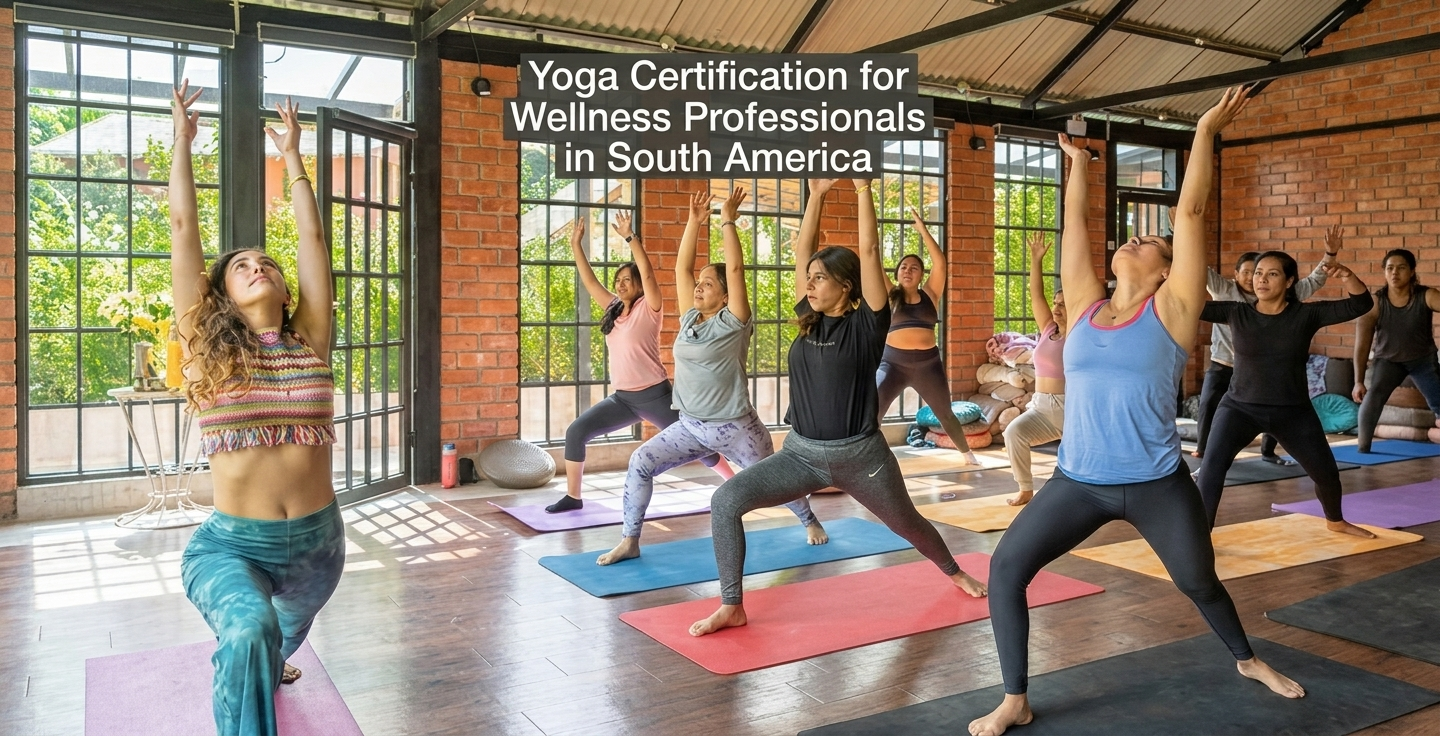
Yoga is becoming an increasingly valuable discipline in the wellness industry, combining physical movement, breathing techniques, mindfulness, flexibility, and relaxation. Yoga Certification for Wellness Professionals in South America offers fitness trainers, wellness coaches, massage therapists, and holistic health practitioners an opportunity to expand their professional knowledge and develop new skills.
Through structured yoga education, professionals can explore yoga philosophy, anatomy, meditation, asana practice, and teaching methodology. With growing interest in holistic wellness across Brazil, Argentina, Chile, Colombia, and Peru, yoga education can open doors to various professional opportunities. Certified practitioners can explore teaching opportunities in yoga studios, fitness centres, wellness retreats, and independent practice.
Whether you want to enhance your existing wellness career or become a professional yoga teacher, choosing the right certification programme can help you build a strong foundation and develop responsible teaching skills.
Why Should Wellness Professionals Consider Yoga Certification in South America?
Wellness professionals regularly help individuals improve their physical health, mental well-being, lifestyle habits, and overall quality of life. Adding yoga education to their existing professional knowledge can help them understand the connection between physical movement, breathing, relaxation, and mindfulness. Yoga offers a structured approach to supporting flexibility, balance, strength, body awareness, and stress management.
Yoga Certification for Wellness Professionals in South America can be particularly valuable for practitioners who want to expand their services and develop a more comprehensive understanding of holistic wellness. A certified training programme introduces the theoretical and practical foundations of yoga, helping participants understand how to guide students through appropriate practices.
Benefits of Adding Yoga to an Existing Wellness Career
- Expanded Professional Knowledge: Yoga teacher training introduces anatomy, physiology, yoga philosophy, meditation, pranayama, and teaching techniques.
-
More Comprehensive Wellness Services: Certified yoga teachers can introduce suitable yoga classes and sessions into their professional services, provided these activities fall within their qualifications and scope of practice.
-
Better Understanding of Mind-Body Practices: Yoga connects physical movement with breathing, concentration, and relaxation.
-
Additional Career Opportunities: Yoga certification can create opportunities to work with yoga studios, fitness centres, wellness resorts, community organisations, and retreat providers.
-
Personal and Professional Development: Structured yoga education encourages discipline, self-awareness, regular practice, and continuous learning.
-
Greater Client Engagement: Wellness practitioners who understand yoga can introduce appropriate movement and relaxation activities to interested clients.
Take the Next Step in Your Yoga Journey with YAI South America
Whether you are a yoga teacher looking for professional certification or a yoga school seeking certification, YAI provides opportunities to support your professional journey and recognition. Choose the relevant application below to get started.
School: https://form.jotform.com/250402319636452
Teacher: https://form.jotform.com/250700797178464
Who Can Apply for Yoga Teacher Certification as a Wellness Professional?
Yoga education is suitable for individuals from different professional backgrounds. You do not necessarily need to have previous experience as a yoga instructor to begin a foundational teacher training programme. However, an interest in yoga, a willingness to practise regularly, and a commitment to learning are important.
Yoga Certification for Wellness Professionals in South America can attract people who already understand physical fitness, healthy living, body movement, and personal development. Their existing professional knowledge may provide a useful foundation for understanding yoga-related subjects.
Professionals Who Can Benefit from Yoga Training
1. Fitness Trainers and Personal Trainers: Fitness professionals can explore yoga to develop additional knowledge of flexibility, balance, mobility, and controlled movement. Yoga teacher training can help them understand how to structure sessions for different student needs.
2. Holistic Wellness Coaches: Wellness coaches who guide clients towards healthier lifestyles can explore yoga philosophy, meditation, and breathing practices. These subjects can complement their existing wellness education and support a broader approach to personal well-being.
3. Massage Therapists and Bodywork Practitioners: Massage therapists already work with physical relaxation and body awareness. Yoga education can introduce them to movement-based practices and the relationship between posture, flexibility, and relaxation.
4. Nutrition and Lifestyle Professionals: Nutritionists and lifestyle coaches can explore yoga as another discipline connected with healthy living. Certification provides an opportunity to understand yoga practice and potentially offer separate, appropriately qualified yoga sessions.
5. Pilates and Movement Instructors: Professionals who teach Pilates, dance, or other movement-based activities may find yoga education useful for expanding their knowledge of balance, breathing, flexibility, and body alignment.
6. Wellness Entrepreneurs: Individuals operating wellness centres, fitness studios, or holistic health businesses can pursue yoga training to develop their own teaching skills or better understand the yoga services offered by their organisations.
What Qualifications Are Required for Yoga Certification in South America?
Entry requirements depend on the yoga school, certification provider, course format, and training level. Many foundational yoga teacher training programmes welcome beginners, while advanced programmes may require previous yoga education or teaching experience.
Wellness professionals should review the admission requirements before enrolling. Some programmes may request information about previous yoga practice, while others may include an introductory assessment to understand the participant's experience and learning objectives.
Common Admission Requirements
-
Minimum Age: Many teacher training providers establish a minimum age requirement, commonly 18 years. Applicants should check the specific age policy of their chosen programme before submitting an application.
-
Interest in Yoga Practice: A genuine interest in yoga is important because teacher training involves regular physical practice, theoretical learning, and personal development.
-
Educational Background: A specific university degree is generally not required for foundational yoga teacher training. However, some advanced courses may request previous certification or relevant professional experience.
-
Basic Physical Readiness: Participants should be prepared to practise yoga postures, breathing exercises, and relaxation techniques.
-
Language Understanding: South American programmes may be delivered in Spanish, Portuguese, or English, depending on the institution.
-
Commitment to Training: Teacher education requires consistent attendance, practice, assignments, and assessments. Participants should understand the time commitment before enrolling.
How to Choose the Right Yoga Teacher Training Programme in South America
Selecting an appropriate training programme is an important step towards becoming a qualified yoga teacher. With different yoga schools, course structures, teaching styles, and certification options available, wellness professionals should evaluate their choices carefully.
The right programme should offer a balanced combination of theoretical education, practical yoga sessions, teaching methodology, and supervised practice. It should also explain the certification process clearly, including course hours, assessments, completion requirements, and any additional registration options.
Important Factors to Evaluate Before Enrolling
-
Curriculum and Course Structure: Review whether the programme includes yoga philosophy, anatomy, physiology, asanas, pranayama, meditation, and teaching methodology.
-
Certification Recognition: If you are considering Yoga Alliance registration, check whether the school is currently listed as a Certified Yoga School and whether the programme meets the applicable requirements
-
Experienced Instructors: Research the qualifications, teaching background, and experience of the trainers. Experienced educators can provide useful guidance on yoga techniques, student instruction, and safe practice.
-
Practical Teaching Experience: Look for programmes that include supervised teaching practice, lesson planning, feedback, and classroom experience.
-
Flexible Learning Options: Wellness professionals may have existing work responsibilities. Compare in-person, online, and hybrid programmes to identify a learning format that fits your schedule and practical training needs.
-
Course Fees and Additional Costs: Compare tuition fees, study materials, examination charges, accommodation, and travel expenses. Understanding the complete financial commitment helps prevent unexpected costs.
What Subjects Are Covered in Professional Yoga Certification Courses?
A comprehensive yoga teacher training programme introduces participants to the fundamental principles and practices required to understand and teach yoga. The curriculum generally combines traditional yoga knowledge with modern concepts of anatomy, physiology, movement, and teaching methodology.
For wellness professionals, these subjects are particularly useful because they provide a deeper understanding of how yoga works as a mind-body discipline. Yoga Certification for Wellness Professionals in South America should ideally include both theoretical education and practical learning so participants can develop a strong foundation before teaching others.
Essential Subjects in Yoga Teacher Training
1. Yoga Philosophy and History: Students explore the origins, traditional principles, and philosophical foundations of yoga. Understanding yoga philosophy helps future teachers explain that yoga involves more than physical postures and includes mindfulness, discipline, and self-awareness.
2. Yoga Anatomy and Physiology: This subject introduces the musculoskeletal system, joints, muscles, movement patterns, and basic physiological processes. It helps teachers understand body alignment and recognise when a posture may need modification.
3. Asana Practice: Participants learn traditional yoga postures, their variations, benefits, and appropriate techniques. Regular practice develops an understanding of posture alignment, balance, flexibility, strength, and body awareness.
4. Pranayama and Breathing Techniques: Pranayama introduces different breathing practices used in yoga. Students learn techniques such as diaphragmatic breathing and alternate nostril breathing, along with appropriate guidance for practising them safely.
5. Meditation and Mindfulness: Meditation education helps participants understand concentration, awareness, relaxation, and mental discipline. These practices can become valuable components of yoga sessions when introduced appropriately.
6. Teaching Methodology: Future instructors learn how to structure yoga classes, demonstrate postures, communicate instructions, manage class timing, and guide students through different stages of a session.
7. Yoga Ethics and Professional Responsibilities: Students explore respectful teaching practices, professional boundaries, student communication, and responsible instruction. This knowledge is important when working with individuals from different age groups and physical backgrounds.
8. Practical Teaching and Assessment: Many programmes include teaching demonstrations, lesson planning, practical assignments, and instructor feedback. These activities help participants apply their knowledge in realistic teaching situations.
How Long Does It Take to Complete Yoga Teacher Certification?
The duration of yoga teacher training depends on the certification level, institution, course format, and study schedule. Some programmes offer intensive training over several weeks, while others provide part-time learning spread across several months.
Wellness professionals should select a programme based on their professional responsibilities and learning preferences rather than choosing only the shortest available course. Adequate time for personal practice, theoretical understanding, and teaching experience is important for developing confidence.
Common Yoga Teacher Training Levels
1. 200-Hour Yoga Teacher Training: This is a common foundational training level for aspiring yoga teachers. It introduces essential subjects such as yoga philosophy, anatomy, asana practice, pranayama, meditation, and teaching methodology.
2. 300-Hour Advanced Teacher Training: This programme is generally intended for teachers who have already completed foundational training. It provides more advanced knowledge of yoga techniques, teaching skills, philosophy, and specialised practices.
3. 500-Hour Yoga Teacher Training: This training pathway combines foundational and advanced education, depending on the school's structure and applicable registration requirements. It offers an opportunity to develop broader knowledge and teaching experience.
4. Specialised Yoga Training: Some institutions provide additional education in areas such as restorative yoga, prenatal yoga, children's yoga, meditation, or yoga for older adults. These programmes may have separate prerequisites and do not automatically replace foundational teacher training.
Choosing a Suitable Training Duration
Before enrolling, check the total training hours, attendance policy, assessment requirements, and practical teaching components. An intensive course may require full-time participation, whereas a part-time programme can offer more flexibility for working professionals.
It is also important to understand that completing a course and becoming eligible for an optional professional registration are not necessarily the same thing. Always verify the specific requirements of the certification provider and any registration organisation you intend to approach.
Can Wellness Professionals Complete Yoga Certification Online?
Online learning has made yoga education more accessible to people who cannot regularly attend physical training sessions. Wellness professionals in Brazil, Argentina, Chile, Colombia, Peru, and other South American countries may explore online programmes offered by institutions in their own country or internationally.
However, online yoga certification should be evaluated carefully. A programme that includes recorded lessons alone may not provide sufficient opportunities to develop practical teaching skills. Participants should look for instructor interaction, live demonstrations, feedback, and supervised teaching wherever possible.
Online, In-Person, and Hybrid Training Options
1. Online Yoga Teacher Training: Online programmes allow students to access educational materials from different locations. They may include recorded classes, live sessions, reading materials, assignments, and online assessments.
2. In-Person Yoga Training: Classroom-based programmes provide direct interaction with instructors and other students. Participants can receive immediate feedback on posture alignment, breathing techniques, and teaching demonstrations.
3. Hybrid Yoga Certification: Hybrid programmes combine online theoretical learning with in-person practical sessions. This approach can be useful for working professionals who need flexibility without missing important practical instruction.
4. Self-Paced Learning: Some institutions offer flexible programmes that allow participants to study according to their schedules. Students should confirm whether the programme includes adequate assessment and instructor support.
5. International Training Opportunities: Wellness professionals can also explore training providers outside their home country. Before enrolling, they should check language requirements, travel arrangements, certificate validity, and any applicable registration conditions.
6. Practical Teaching Requirements: Regardless of the learning format, practical teaching experience is important. Participants should understand how many supervised teaching hours are included and how their teaching ability will be assessed.
What Career Opportunities Are Available After Yoga Certification in South America?
Professional yoga education can create additional career possibilities for wellness practitioners who want to expand their existing services or enter the yoga teaching industry. South America's wellness sector includes yoga studios, fitness centres, holistic health facilities, wellness retreats, and independent instructors.
However, completing a certification programme does not guarantee employment or a particular income. Career opportunities depend on teaching ability, experience, location, professional networking, local demand, and the quality of services offered.
Potential Career Paths for Certified Yoga Teachers
1. Yoga Studio Instructor: Certified teachers can explore opportunities to conduct group classes at established yoga studios. Building a strong understanding of different student requirements can help instructors develop effective and engaging sessions.
2. Corporate Wellness Instructor: Businesses increasingly explore workplace wellness activities to support employee well-being. Yoga teachers may offer suitable sessions focusing on movement, relaxation, breathing, and mindfulness.
3. Wellness Retreat Instructor: South America has destinations where wellness retreats and holistic experiences attract visitors. Qualified instructors may explore opportunities to teach yoga as part of retreat programmes, subject to the provider's requirements.
4. Independent Yoga Teacher: Experienced professionals may establish independent teaching services by offering private sessions, group classes, or online yoga instruction. Building a professional reputation and maintaining consistent teaching quality are important.
5. Fitness Centre Instructor: Yoga teachers can approach fitness centres and health clubs that offer group exercise programmes. Their yoga knowledge can complement existing fitness activities and provide another class option.
6. Online Yoga Educator: Teachers can develop online classes, virtual workshops, and educational content for students in different locations. This career path requires effective communication, appropriate technology, and a clear understanding of online teaching responsibilities.
Developing a Sustainable Yoga Teaching Career
A sustainable career requires more than obtaining a certificate. New teachers should continue practising, attend workshops, improve their teaching communication, and understand the needs of their students. Wellness professionals can use their previous industry experience to identify suitable teaching opportunities. For example, a fitness instructor may focus on yoga for general fitness, while a wellness coach may explore mindfulness-oriented sessions within their professional scope.
It is equally important to understand the difference between yoga teaching and regulated healthcare services. A yoga certificate does not qualify someone to diagnose medical conditions, prescribe treatment, or provide physiotherapy unless they hold the relevant additional professional qualifications.
Get your internationally recognized yoga certification with authentic yoga standards in South America.
Conclusion
Yoga education offers wellness professionals an opportunity to expand their knowledge, develop new practical skills, and explore additional career opportunities. Whether you work in fitness, holistic wellness, massage therapy, personal training, or lifestyle coaching, learning yoga can introduce you to a broader understanding of physical movement, breathing techniques, meditation, and mind-body practices.
Yoga Certification for Wellness Professionals in South America can be a valuable step towards developing a professional foundation in yoga. By choosing a suitable training programme, understanding certification requirements, and gaining practical teaching experience, aspiring instructors can prepare themselves for opportunities within the wellness industry.
Explore Our Recent Blogs
-
How Physiotherapists Get Yoga Teacher Certified in South America
-
How Healthcare Professionals Get Yoga Certified in South America
-
How Fitness Instructors Can Get Yoga Certification in South America
Frequently Asked Questions
1. Can I become a certified yoga teacher without previous teaching experience?
Yes, many foundational yoga teacher training programmes accept beginners without previous teaching experience. A genuine interest in yoga and willingness to learn are important starting points. A structured programme helps participants develop the theoretical knowledge and practical skills needed to begin teaching.
2. Is a 200-hour yoga teacher certification sufficient to start teaching?
A 200-hour programme is a common foundational qualification for aspiring yoga teachers. It generally covers yoga philosophy, anatomy, asana practice, pranayama, meditation, and teaching methodology. However, you should check the requirements of the school, registration organisation, and potential employers before beginning your teaching career.
3. Can I complete yoga teacher training while working as a wellness professional?
Yes, many training providers offer part-time, online, and hybrid learning options. These formats allow professionals to balance their existing work responsibilities with yoga education. You should choose a programme that provides sufficient practical training and instructor feedback.
4. Is Yoga Alliance certification recognised in South America?
Yoga Alliance is an international yoga membership and credentialing organisation with a global presence. Its Certified Yoga School and Certified Yoga Teacher credentials are widely recognised within parts of the yoga industry. However, registration is not a government-issued professional licence, and acceptance can vary between employers and countries.
5. What is the difference between yoga certification and yoga teacher registration?
Yoga certification generally refers to completing a training programme and receiving a certificate from the issuing institution. Registration is a separate process that may be available through an organisation such as Yoga Alliance when its eligibility requirements are met. Therefore, completing a training course does not automatically mean that you are certified with an external organisation.
6. Can I teach yoga internationally after completing my certification?
A yoga teaching certificate can support applications for teaching opportunities in different countries. However, international employment depends on local regulations, employer requirements, visa conditions, and the nature of the teaching role. Researching these requirements before accepting an international position is important.